

Interview programme · Europe
Interviews openInterviews close end of October 2026
The software dilemma
How Europe’s industrial automation leaders are navigating the build vs. partner decision
Programme overview
Every European automation vendor is making the same decision right now. Companies that have built their reputation on sensors, control systems, industrial connectivity, process instrumentation and factory equipment are facing a question that didn’t exist a decade ago: how much software capability do we need, and do we build it, buy it or partner for it?
This research is for the people making that call. We’re speaking with the people inside Europe’s automation vendors who are shaping software strategy, allocating R&D investment, evaluating partnerships and deciding what to build versus where to collaborate.
Against the backdrop of the EU AI Act, NIS2 cyber rules and headline moves like the 7,000-strong Accenture-Siemens partnership, the pressure to act is real. Software will generate more than half of all new value in Europe’s automation sector by 2027, yet most vendors still spring from hardware roots.
In 30-minute interviews, we explore what triggered the shift, how organisations are allocating resources between hardware innovation and software development, and what they’ve learned along the way. Participants receive a personalised one-page write-up of their insights, feature in a market view report, and gain recognition among Europe’s automation leaders.
What we explore
- Strategic philosophy on building versus partnering for software capabilities
- How customer expectations around openness and interoperability are changing
- The shift toward equipment as a service and what software that requires
- Preparing for the Cyber Resilience Act (CRA), due December 2027
- The role of partnerships in future competitive strategy
- The software talent gap and how organisations are addressing it
- What organisations have learned and what they would do differently
Interview questions
10 questions, shared in advance so you can think them through before we talk.
- 1
How has the balance between hardware and software shifted at your organisation over the past three to five years, and what drove that?
- 2
What are your customers asking for now in terms of software capability that they were not asking for three years ago?
- 3
Are you seeing more demand for pre-integrated platforms or do customers prefer to assemble best-of-breed components themselves?
- 4
How are you finding the shift in skills needed, from traditional automation engineering to software development, and how is your organisation addressing that gap?
- 5
What is your current approach to the software question: are you primarily building in-house, acquiring, partnering, or a mix?
- 6
What has been the hardest part of developing or acquiring software capabilities that you did not anticipate?
- 7
How are you thinking about upcoming regulatory requirements like the Cyber Resilience Act and how they affect your software strategy?
- 8
Are you seeing a shift towards selling equipment as a service rather than as a one-off purchase, and what software does that require?
- 9
What role do you see partnerships playing in how your organisation competes over the next three to five years?
- 10
If you could go back three years, what would you do differently in your software strategy?
The interview process
Step 1 – Read the FAQs
Before you bookBefore you book, read our FAQs so you know what taking part involves: the interview format, what happens afterwards and how your contribution is used.
Read the FAQsStep 2 – TechPros.io interview
30 minA 30-minute TechPros.io Zoom interview, with the questions shared in advance. It ends with a short anonymous poll that feeds the report’s infographics. We produce a short summary of your key points to support a more focused follow-up conversation.
Book your interviewStep 3 – Follow-up call with AVEVA
20–30 minA short follow-up call with AVEVA to expand on your insights. TechPros.io then writes up your interview one-pager and sends it to you ahead of the review call.
See an example one-pagerStep 4 – One-pager review
15–30 minWe run through your one-pager to capture your feedback and agree any changes, and let you know the expected publication date.
Step 5 – Market view report
PublicationWe email you a week before the report is published on LinkedIn and again on the day of launch, often with a draft post for you to reshare.
See an example market view reportWhat taking part produces
Real one-pagers and Market View reports from past programmes. Each one opens the published original.
Interview one-pagers
Gareth Owen OBE
Humanitarian Director, Save the Children UK
Read the one-pager
Philippa Barnes
Director, ReThink HR
Read the one-pager
Phil Bevan
Director of People and Culture, Nacro
Read the one-pagerMarket View reports
Beyond MQLs: Reframing success in B2B marketing
Market View report · 2nd edition · sponsored by 6sense
Read the report
Adaptive HR in a Dynamic World
Market View report · sponsored by HubbubHR
Read the report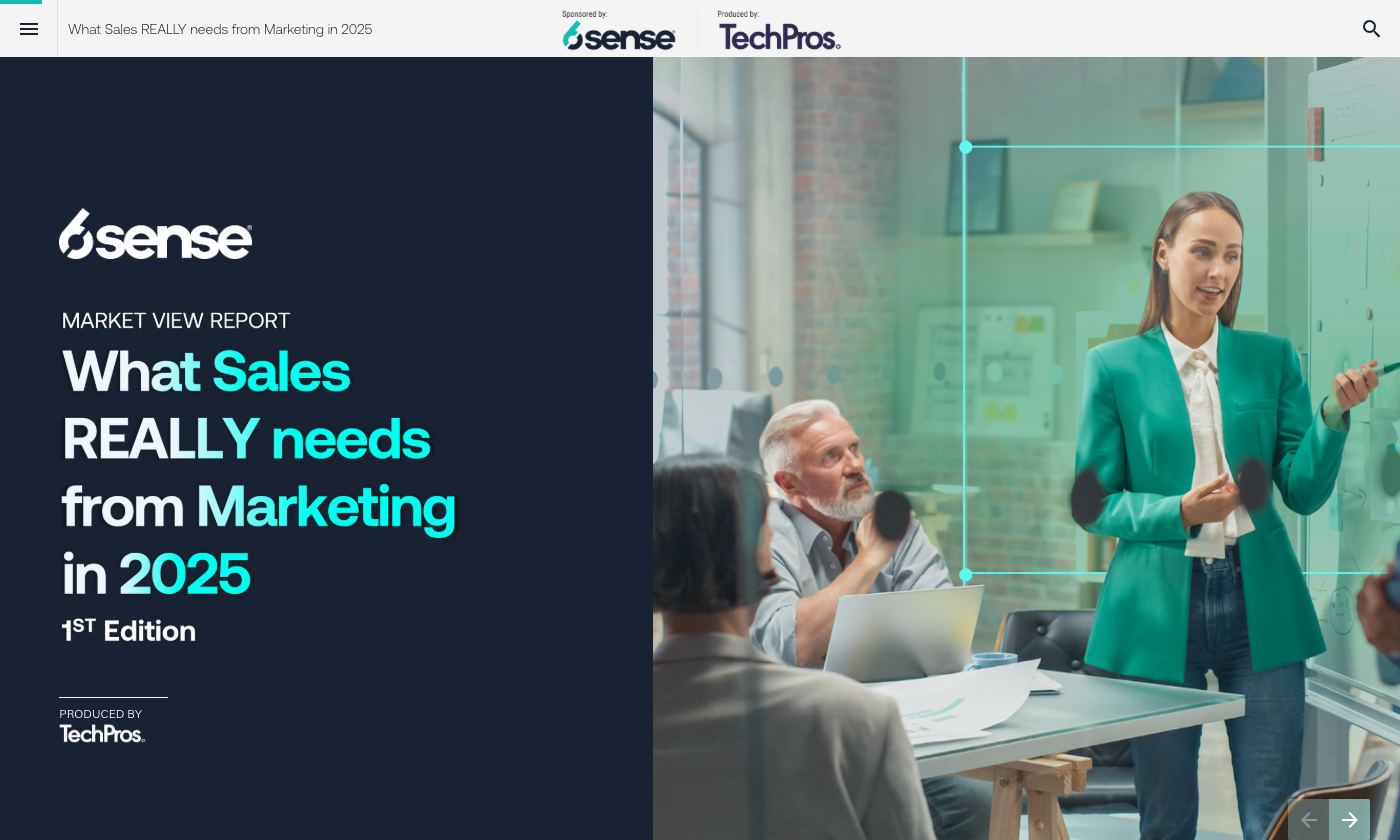
What Sales REALLY needs from Marketing in 2025
Market View report · sponsored by 6sense
Read the reportWhat we need from you
Company email
Please share your company email when you book, so we can coordinate with you.
Professional headshot
We need a professional headshot for your one-pager and will arrange this with you by email.
Employment status
We ask every participant to confirm they are currently in their role, so your insights reflect your live experience and the publication accurately represents your position.
Follow us on LinkedIn
About our sponsor
AVEVA is a global leader in industrial software with over 50 years of experience connecting industrial information and AI to improve engineering, operations and performance. The company’s portfolio spans the entire industrial lifecycle, from process design and simulation to asset performance management.
Serving over 20,000 enterprises in more than 100 countries, AVEVA provides teams with trusted information and AI-enriched insights to engineer efficiently and improve operations.
With long-standing partnerships with major automation vendors, and over 6,000 partners across the industrial sector, AVEVA brings direct experience of how automation companies approach software investment. This research reflects their genuine interest in understanding how the wider sector is navigating this question.
Add your voice to the report
Share how your organisation is approaching the software question, alongside automation leaders across Europe. Interviews close at the end of October 2026.